The Green Sun That Made Me Rethink Education
And what it taught me about learning, love, and letting go
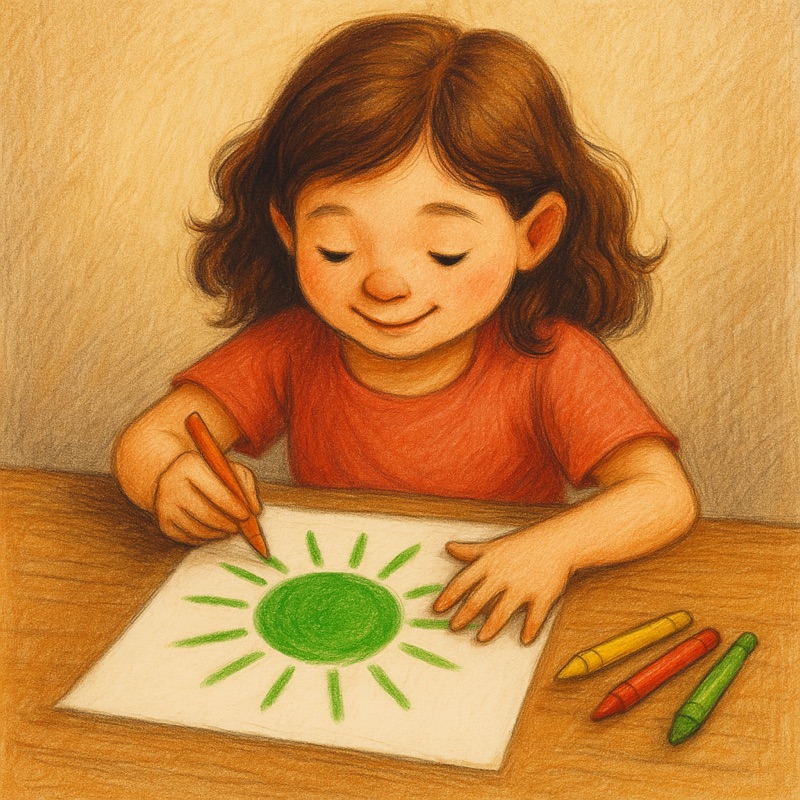
A few months ago, I was sitting quietly in a classroom, observing a drawing session in progress. One little girl, barely six, was lost in her world of colors. Her hands moved with joy, her face lit with curiosity. And then she did something delightful—
She painted the sun green.
Before I could smile, the teacher gently leaned over and said,
“No, dear… the sun is yellow.”
The girl’s smile faltered for a moment. She didn’t argue. She nodded, and picked up the yellow crayon.
That moment stayed with me.
A week later, in a different classroom, a little boy stood up proudly and said,
“Yesterday I goed to the market with my papa!”
His face beamed with pride. But the response was swift:
“It’s not ‘goed’, it’s ‘went’.”
Another moment—
A child wrote a few letters in reverse.
Before anyone could notice the effort, a red pen had already circled the error.
We Mean Well. But…
As teachers, mentors, or parents, we do this with the best intentions.
We correct. We guide. We fix.
Because we worry:
- “If I don’t correct this now, the mistake will become a habit.”
- “Other children might copy it.”
- “They need to learn it the right way.”
But here’s the truth I’ve come to realize—
In our rush to correct, we often interrupt something magical.
What Actually Happens?
- The child may remember the correction, but also the sting of embarrassment.
- The class may stay “on track,” but imagination takes a quiet step back.
- The notebook may look clean, but the child may stop exploring.
We end up teaching fear of mistakes instead of love for learning.
And slowly, unknowingly, creativity gets replaced by compliance.
A Thought Crossed My Mind…
What if we didn’t correct everything immediately?
What if we let the green sun shine a little longer?
What if we said—
“That’s an interesting color for the sun! What made you choose it?”
Instead of “fixing,” what if we got curious?
Three Gentle Shifts That Changed Everything
1. Let It Flow, Fix It Later
Let children express themselves without the red pen.
Later, ask:
“Would you like to add anything else?”
Correction becomes a gentle invitation, not a punishment.
2. My Word, My World
Encourage children to invent words. Ask them:
“What does ‘flibberish’ mean to you?”
It’s not nonsense. It’s ownership. It’s language being born in real time.
3. Celebrate Before You Correct
Before pointing out what’s “wrong,” ask:
“What do you like about your friend’s idea?”
Teach children to see brilliance before they search for flaws.
A Pause That Became a Turning Point
During a training session, one teacher said something I’ll never forget:
“I used to think feedback was about correcting what’s wrong.
Now I see—it’s about giving space to think again.”
That space…
That sacred pause…
That’s where learning truly lives.
The Green Sun Still Glows in My Mind
Children don’t stop learning when they make mistakes.
They stop when they begin fearing them.
Let’s not rush to extinguish the green suns, the “goed” stories, or the mirrored letters.
Let’s pause.
Let’s listen.
Let’s wonder aloud.
And in doing so, we may just witness something extraordinary—
Not perfection.
But the possibility.
.png)


Comments
Post a Comment